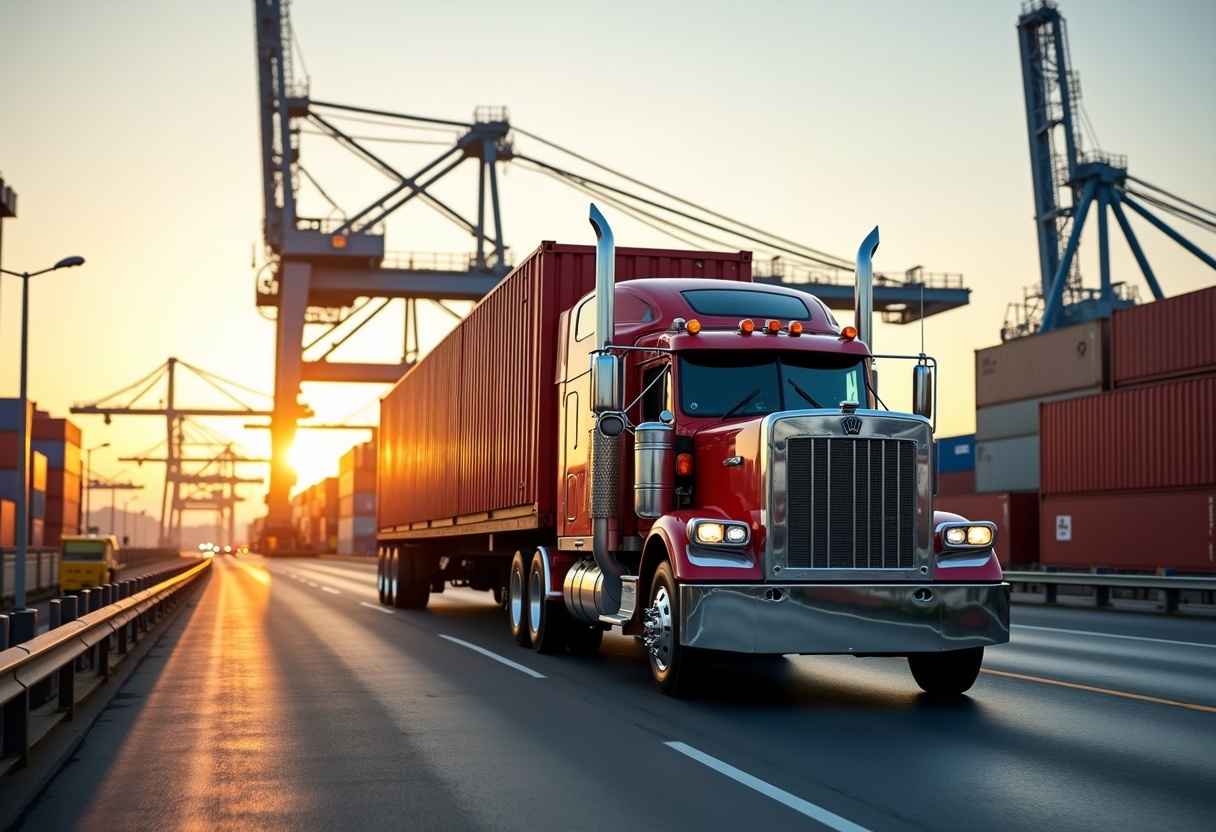
When a container ship unloads at the Port of Seattle or the Port of Tacoma, the cargo still has a long way to go before it reaches a warehouse shelf. That gap between the terminal and the door is what ocean trucking fills. It is the road leg of ocean freight — the drayage move, the intermodal handoff, and the last stretch of delivery that turns a steel box on a dock into product in a building.
SeaSound Transport runs this work out of Kent, WA, every weekday. We pull containers from both PNW marine terminals and deliver across King and Pierce County, and we have learned that ocean trucking is less about driving and more about the paperwork, timing, and terminal knowledge that decide whether a move takes three hours or three days. If you are trying to understand what ocean trucking covers and how it fits your freight, this guide breaks it down.
What Ocean Trucking Actually Means
Ocean trucking is the truck service that connects marine container terminals to the rest of the supply chain. A steamship line brings a container across the Pacific. Once that box is discharged and cleared, somebody has to physically pull it out of the terminal and move it to a warehouse, distribution center, rail ramp, or cross-dock. That is ocean trucking.
It covers a few related moves:
- Container drayage — the short-haul truck move from the port terminal to a nearby warehouse or rail ramp.
- Intermodal drayage — pulling a container to or from a rail ramp so it can ride the train for the long middle leg.
- Port-to-door delivery — taking an import container from the terminal all the way to the consignee's facility.
- Export drayage — bringing a loaded container from a shipper's dock back into the terminal to catch an outbound vessel.
The unifying thread is the marine terminal. If a truck move touches a port gate, it is ocean trucking. If it never sees a dock, it is general freight shipping, and the two are run differently for a reason.
How a Container Move Works, Step by Step
A drayage run looks simple on a map. In practice, the move only happens after several pieces line up. Here is the path a typical import takes through our operation.
1. The Container Is Released
Before anyone hooks a chassis to a box, the steamship line has to release the container and Customs has to clear it. The trucker pulls a container release (also called a pick-up number) from the line's online portal. Without that release, the terminal will not let the truck through the gate. We track this closely because a missing release is the number one reason a move slips a day.
2. A Terminal Appointment Is Set
Both PNW terminals use appointment systems for import delivery. The trucking company has to book a window to pick up the box. Miss the window and the move gets pushed to the next available slot. During peak season, those slots can be tight, so we book the appointment the moment the release drops.
3. The Driver Gates In
At the terminal, the driver shows the TWIC card, the truck pass, and the container release. The gate clerk validates the move, assigns a chassis if the trucker does not bring one, and points the driver to the stack. Inside the terminal, the driver finds the box, hooks up, does a quick visual inspection for damage, and gates back out. That whole cycle can take anywhere from 20 minutes on a quiet morning to two hours when the yard is congested.
4. The Move to the Warehouse
Once the box is on the chassis, the drive begins. From the Port of Tacoma to Kent, the run is roughly 25 miles up I-5 and across the valley. From the Port of Seattle's Terminal 5 or T18 to Kent, the route runs south on I-5 through the Boeing Field corridor. Both moves are short by trucking standards, which is why drayage is priced and scheduled differently than long-haul freight.
5. Delivery and Empty Return
At the warehouse, the container is unloaded. Then the empty box has to go back — either to an empty depot or back into the terminal for the steamship line. Running an empty back into the terminal on the same day avoids per-diem storage fees that stack up fast. This is where a lot of newer carriers lose money: they forget the empty return is part of the move.
Why Ocean Trucking Matters for PNW Businesses
The Pacific Northwest runs on imports. Retailers in Seattle, manufacturers in Auburn, distributors in Kent, and cold-storage operators in Sumner all rely on containers that come through one of two ports. If drayage slows down, their shelves empty and their production lines stop. Ocean trucking is the connective tissue.
Two things make PNW ocean trucking unique. First, the region has two competing marine terminals roughly 35 miles apart — the Port of Seattle and the Port of Tacoma, jointly marketed as the Northwest Seaport Alliance. Shippers can route through either, and the trucking company has to be able to serve both with the same level of familiarity. Second, the I-5 corridor between the ports and the Kent Valley is one of the most concentrated warehouse districts on the West Coast. A carrier that knows the terminal gates, the choke points on I-5 and I-405, and the receiving hours at each warehouse can save a shipper hours per move.
If you want to dig into the cost side of this, our freight shipping cost breakdown walks through how drayage rates, fuel surcharges, and per-diem fees actually get billed.
What Can Go Wrong
Ocean trucking has a reputation for being unpredictable, and the reputation is earned. The most common problems we see:
- Missing releases. The container is on the dock, the shipper thinks it is moving, but the steamship line has not issued a release. Nothing moves until that clears.
- Terminal congestion. When vessels bunch up, gate lines stretch and appointment windows fill. A driver can sit two hours to gate in.
- Per-diem and demurrage. A box that sits at the terminal past its free time starts billing the shipper daily. Drayage carriers have to pull fast to keep this off the invoice.
- Chassis shortages. When the chassis pool runs short, the trucker waits or sources a private chassis. Both cost time.
- Receiving windows. A warehouse that takes deliveries 8 to 2 will not accept a container that arrives at 3:30. The move has to be timed to the receiver, not just the port.
Knowing these failure modes is half the job. Our trucking company best practices cover how we build dispatch around them.
How SeaSound Transport Handles Ocean Trucking
We run ocean trucking as a service, not a side job. That means we are set up for the parts that bite other carriers.
Both ports, one call. Our trucks dray out of the Port of Seattle and the Port of Tacoma. You do not have to pick a terminal and then find a carrier for it — we cover both sides of the Northwest Seaport Alliance from our Kent yard.
TWIC-carded drivers and registered equipment. Every driver who enters a marine terminal for us carries a valid TWIC, and our trucks are registered with both terminals' port-wide access systems. We can gate in without a scramble.
Appointment management. We watch the release portals and book terminal appointments the moment a container is pickable. During peak season, that is what keeps a move on schedule.
Export and import on the same trip. When a shipper has an outbound load, we try to bring it back into the terminal on the same run that delivered an import. It cuts empty miles and keeps the rate down for everyone on the lane.
Status you do not have to chase. We tell you when a container is released, when it gates out and when it is at the receiving door. You should not have to call dispatch to find out where your box is.
Picking an Ocean Trucking Partner
If you are comparing drayage carriers, a few questions separate the ones who actually run the work from the ones who broker it out:
- Do your drivers hold TWIC cards and are your trucks registered at both PNW terminals?
- Do you book terminal appointments, or do I have to?
- How do you handle per-diem exposure if my receiver cannot take the box on the planned day?
- Do you run exports back into the terminal on the same trip?
- Can I see where my container is without calling you?
If a carrier stumbles on those, the gap is in the part of the job that costs you money.
The Bottom Line
Ocean trucking is the move that decides whether your ocean freight actually arrives on schedule or sits on a dock billing you per-diem. It is short on miles and heavy on terminal knowledge, paperwork, and timing. For PNW shippers, working a carrier that knows the Port of Seattle, the Port of Tacoma, the I-5 corridor, and the receiving hours at every warehouse in between is what keeps the supply chain moving.
If you have a container coming through either port and want a drayage move quoted, contact SeaSound Transport. We will pull the release, book the appointment, and get the box to your door.