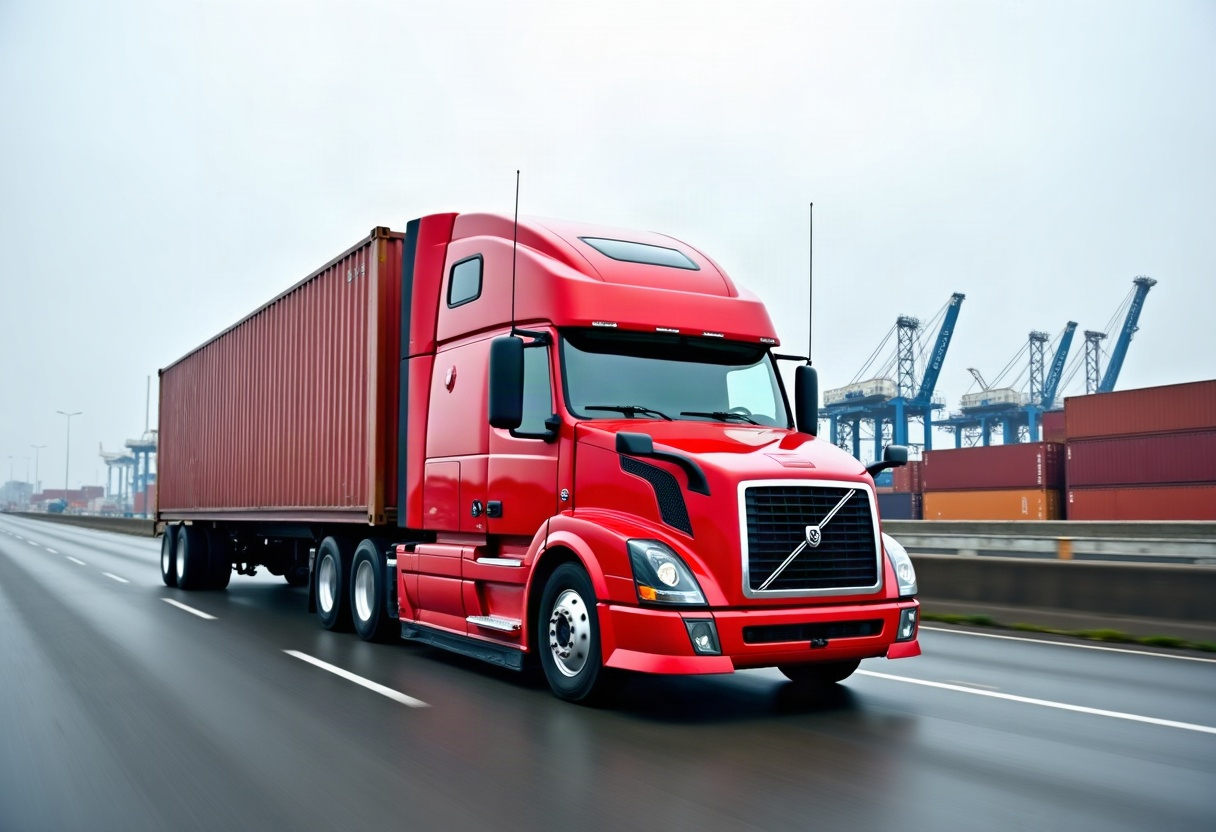
When a shipping container arrives at the Port of Seattle or Port of Tacoma, it does not magically appear at your warehouse. Someone has to pick it up from the terminal, put it on a truck, and drive it to your distribution center. That short-haul move — typically under 50 miles — is called drayage, and it is one of the most time-sensitive legs in the entire supply chain.
If you are searching for "drayage services," you are likely an importer, freight forwarder, or logistics manager who needs a reliable carrier to move containers between port terminals, rail ramps, and inland facilities across the Pacific Northwest. This guide explains what drayage is, how it works at Seattle and Tacoma ports, what to look for in a drayage carrier, and how SeaSound Transport handles the job.
What drayage services are
Drayage is the short-distance transport of shipping containers between a port or rail terminal and a nearby warehouse, distribution center, or intermodal transfer facility. It is the bridge between long-haul transport (ocean shipping or rail) and local delivery.
The most common drayage moves in the Pacific Northwest:
- Port-to-warehouse. A container comes off a ship at the Port of Seattle or Port of Tacoma, gets loaded onto a chassis, and is trucked to a warehouse in Kent, Auburn, or Sumner.
- Rail ramp-to-warehouse. A container arrives on a BNSF or Union Pacific train at a regional intermodal ramp and needs to be picked up and delivered to a local facility.
- Warehouse-to-port. An export container needs to be delivered from a warehouse to the terminal before a vessel's cut-off time.
- Inter-terminal transfers. Containers moved between terminals at the same port complex.
Drayage is not long-haul trucking. The distances are short, but the logistics are complex: terminal appointments, chassis availability, gate congestion, free-time deadlines, and storage fees all compress the window for a successful move.
How drayage works at Seattle and Tacoma ports
The Ports of Seattle and Tacoma together handle millions of TEUs (twenty-foot equivalent units) annually. The harbor drayage process follows a specific sequence:
- Container availability. The shipping line notifies the consignee that the container is available for pickup. This triggers the release of the container in the terminal's gate system.
- Chassis dispatch. The drayage carrier assigns a truck and the correct chassis for the container size. SeaSound Transport handles chassis pairing for 20', 40', 45', and 53' containers as part of the service.
- Terminal gate-in. The trucker arrives at the terminal gate, presents the required documentation (delivery order, photo ID, TWIC card where required), and receives a ticket to the container's slot.
- Container pickup. The container is loaded onto the chassis at the terminal yard and secured for road transport.
- Delivery. The trucker drives the container to the consignee's warehouse or distribution center, where it is offloaded or dropped as a live unload or bobtail return.
- Empty return. After the container is unloaded, the empty container and chassis are returned to the designated depot or terminal.
At the Port of Tacoma, the main container terminals include Husky, Washington United, Pierce County, and Olympic terminals. At the Port of Seattle, Terminal 18 and Terminal 30 handle the majority of international container traffic. Each terminal has its own appointment system, gate hours, and documentation requirements — which is why working with a carrier that knows the terminals matters.
What to look for in a drayage carrier
Not every trucking company can handle drayage. The requirements are specific:
- FMCSA intermodal authorization. The carrier must have FMCSA cargo classifications for Intermodal Containers and General Freight. SeaSound Transport carries both.
- Chassis equipment. The carrier needs chassis for every container size they handle — 20', 40', 45', and 53'. A carrier without the right chassis has to rent one, which adds cost and delay.
- Terminal knowledge. Each terminal has different gate hours, appointment systems, and documentation rules. A carrier who works the terminals daily knows the shortcuts and the pitfalls.
- 24/7 operations. Port terminals and rail ramps have limited free storage time. Once a container's free dwell period expires, storage fees accumulate daily — sometimes $100+ per day. A 24/7 carrier can grab a container the moment it becomes available.
- TWIC-certified drivers. Transportation Worker Identification Credential (TWIC) is required for unescorted access to secure port areas. Without it, a driver cannot enter the terminal.
- Real-time communication. Drayage moves are time-sensitive. Your carrier should confirm pickup, alert you to terminal issues, and provide delivery confirmation without you having to chase them.
How SeaSound Transport handles drayage
SeaSound Transport is a family-owned trucking and drayage carrier based in the Seattle-Tacoma corridor. We operate 24/7, 365 days a year, with a fleet of 10+ power units and chassis equipment configured for the full range of container sizes moving through Pacific Northwest ports.
What that means for your containers:
- Direct drayage service. We pick up your container from the Port of Seattle, Port of Tacoma, or any regional rail ramp and deliver it to your warehouse or distribution center. Most moves within the Seattle-Tacoma-Kent corridor are completed same-day when the container is available and appointment windows align.
- All container sizes. We move 20', 40', 45', and 53' containers — standard, high-cube, and domestic intermodal. Our drivers are trained in proper chassis pairing for each size.
- Terminal coverage. We work the major container terminals at both ports: Terminal 18 and Terminal 30 at Seattle; Husky, Washington United, Pierce County, and Olympic at Tacoma.
- 24/7 pickup capability. Storage fees start the moment a container's free time expires. Our 24/7 operations mean we can retrieve your container at the first available appointment window, minimizing dwell time.
- FMCSA-credentialed. USDOT #4061311, with cargo classifications for General Freight and Intermodal Containers.
For more detail on how we move containers through the ports, see our container transport in Seattle guide. For intermodal rail-to-truck moves, our intermodal trucking guide explains how BNSF and UP intermodal service works across the PNW. And if you need a drayage carrier at the Port of Tacoma specifically, visit our Tacoma container drayage service page.
Get a drayage quote
If you have a container arriving at the Port of Seattle or Port of Tacoma, call (206) 427-6615 or email Contact@seasoundtransport.com. Tell us the container size, pickup terminal, delivery address, and timing. We provide direct pricing with no hidden surcharges, and as a family-owned carrier with our own fleet, we can often schedule same-day or next-day pickup depending on container availability. Request a quote and we will respond fast — because your freight does not wait.