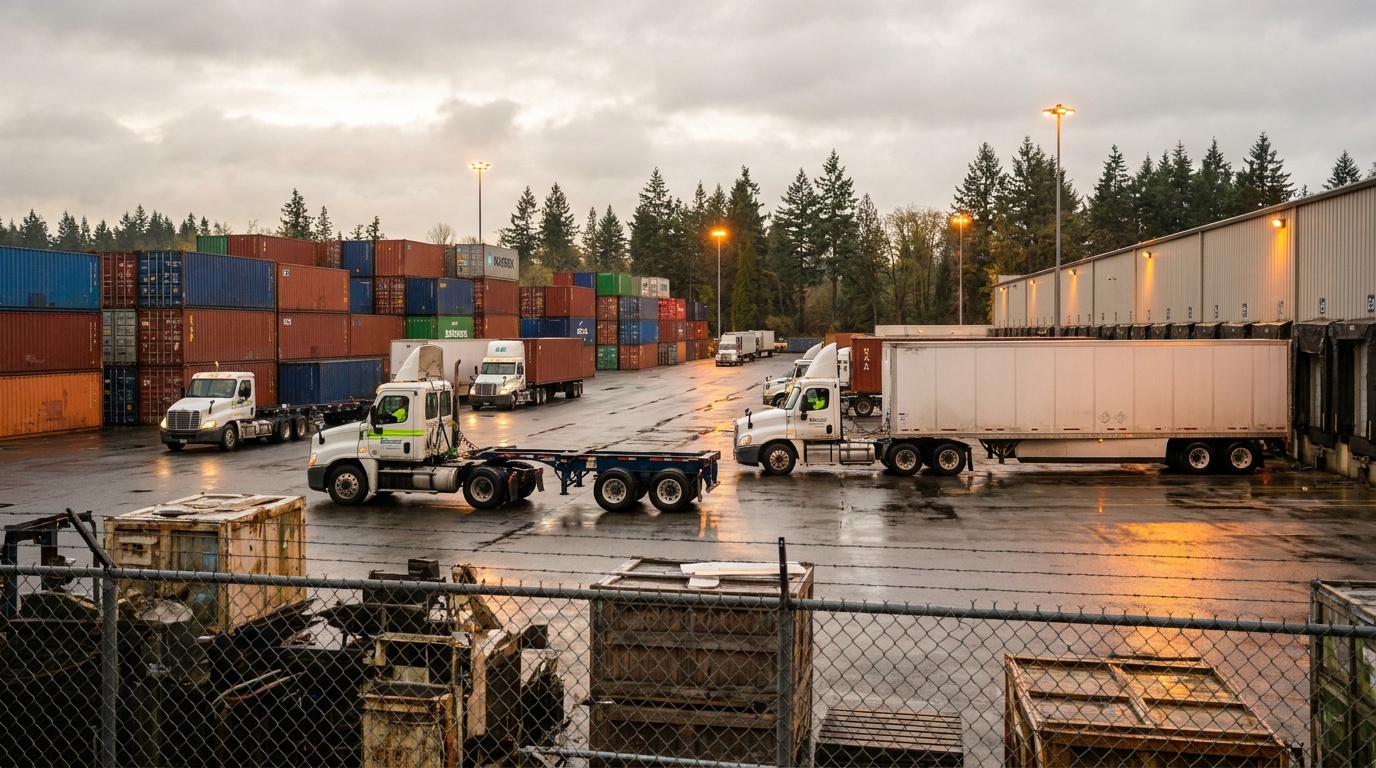
A reliable trucking company seattle washington doesn't get that way by accident. It gets there by doing the same hard things correctly, over and over, in rain and snow and backed-up traffic on the 167 corridor. SeaSound Transport has been hauling freight and moving equipment across Kent, Seattle, Tacoma, Renton, and Auburn long enough to know what actually works. For loads coming through the Port of Seattle or Port of Tacoma, our ocean trucking operations handle the port-to-warehouse drayage that keeps supply chains moving. Here's what we've learned.
1. Know Your Roads Like You Live on Them
You can't run a trucking company in Seattle without understanding the weather, the traffic patterns, and the neighborhoods where you're actually delivering. Every season changes the game. Winter means planning around ice on Snoqualmie Pass. Summer means Seattle gridlock at unpredictable times. Spring in Kent means muddy access roads that close without warning.
We don't just check a map before a run. We know that the 167 southbound gets backed up around 3 PM every weekday. We know that downtown Tacoma has narrow streets that won't fit a 53-footer. We know that Auburn's East Hill area has residential zones where early morning deliveries get pushback from neighbors. When you know the territory, you can promise real arrival times. When you don't, you make excuses.
The difference shows up in your reliability rating and your repeat customers. A trucking company Seattle Washington that guesses at routes loses jobs to one that knows them.
2. Invest in Maintenance Before Breakdowns Invest in You
A broken truck doesn't just cost you that day's revenue. It costs the customer's trust. It costs overtime for the next driver who has to pick up the load. It costs reputation points that took months to earn.
We see trucks fail most often in February, right after the first hard freeze. Diesel gels. Battery terminals corrode. Brake lines freeze. The companies that survive winter are the ones checking fluid levels in November, not the ones waiting for the warning light. A real maintenance schedule isn't a recommendation—it's the price of staying in business.
Every truck in our fleet gets pre-trip inspections that actually mean something. Not a checkbox. An actual look under the hood. A tire pressure check. A test of all the lights. Drivers know that if something's wrong, we fix it before they roll. That accountability runs both directions.
3. Hire Drivers Who Understand the Difference Between Fast and Reckless
The fastest driver isn't always the best one. The best driver is the one who gets the load there safely, on time, without creating a police report.
We hire for attitude first and experience second. Someone who takes pride in the work and understands that speeding through a school zone in Renton or tailgating on I-5 doesn't save an hour—it just makes the insurance company's job harder. A good driver knows the difference between pushing hard and pushing too far.
Training matters more than people think. New drivers on our team ride along with veterans. They learn the routes, the customer expectations, and the real way to handle a rig in traffic. They see that taking an extra five minutes to double-check a load makes the difference between a smooth delivery and a disaster.
4. Use Tracking That Actually Works in Your Territory
Real-time visibility isn't a luxury—it's the only way to run a modern trucking company. When a customer asks where their shipment is, they need an answer that's accurate right now, not "somewhere between Seattle and Tacoma."
Whatever system you pick, test it where your trucks actually run before you commit. Coverage inside marine terminals and out along the rural stretches is patchy, and a tracker that only reports over a live connection will go quiet exactly when a customer calls to ask. Look for one that stores positions while it is offline and backfills them once it reconnects — otherwise the gap in your map becomes a gap in your answer.
The tracking system also protects you. If something goes missing or a customer claims delivery was late, you've got proof. The data eliminates he-said-she-said conversations and lets you run the business on facts instead of disputes.
5. Build Relationships That Survive One Bad Day
Every trucking company Seattle Washington has a day where something goes wrong. A breakdown. A traffic jam that shouldn't happen. A customer who changes their requirements at the last minute. The companies that survive those days are the ones with customers who believe in them.
That belief comes from consistency. It comes from returning calls. It comes from owning mistakes instead of blaming traffic or weather. We lose jobs to bigger carriers sometimes, but we don't lose them to better ones—we lose them to price. And when a customer comes back after trying somewhere else, it's because they remembered what reliability felt like.
Being small enough to care and big enough to deliver matters. In Kent or Renton, that reputation is currency.
6. Price the Work So You Can Afford to Do It Right
A trucking company that's always barely breaking even will eventually break. You can't run newer equipment. You can't pay drivers enough to keep them. You can't afford the insurance and the maintenance that keep everything legal and safe.
We price our work to cover the actual cost of operating a truck—fuel, maintenance, insurance, driver wages, and a margin that lets us reinvest. When someone asks why we cost more than the lowest bid, we show them the math. Newer trucks. Drivers who've been with us for years. Equipment that doesn't break. That costs money. That money comes from customers who understand the value of reliability.
The race to the bottom in pricing is a race nobody wins. Somebody always loses—usually the customer, when the cheap service disappears or cuts a corner.
7. Stay Compliant With Hours of Service and Regulations—No Shortcuts
The Federal Motor Carrier Safety Administration rules exist because drivers who are too tired cause accidents. A trucking company Seattle Washington that cheats on logbook hours or lets drivers exceed the limits isn't clever. It's operating on borrowed luck.
We track hours of service with the same attention we give everything else. Drivers know the rules. We enforce them. It means sometimes a load takes an extra day because we won't run someone more than eleven hours—and that's the right call. Insurance covers the truck. No amount of insurance covers the liability of a tired driver who hits a family on Highway 99.
Compliance isn't a restriction. It's the foundation of a business that can stay open.
Why SeaSound Transport Does This Work
We've stayed in business in this region because we understand that a trucking company Seattle Washington is only as good as its next delivery. There's no hiding behind corporate layers. There's no call center script that fixes a missed deadline. When something goes wrong, it affects us directly—our reputation, our customers, and the people who depend on us to show up.
Learn more about who we are and why we matter.
If you're in Kent, Tacoma, Renton, Auburn, or anywhere in the Seattle metro area and you need hauling or freight transport you can count on, get in touch with SeaSound Transport.