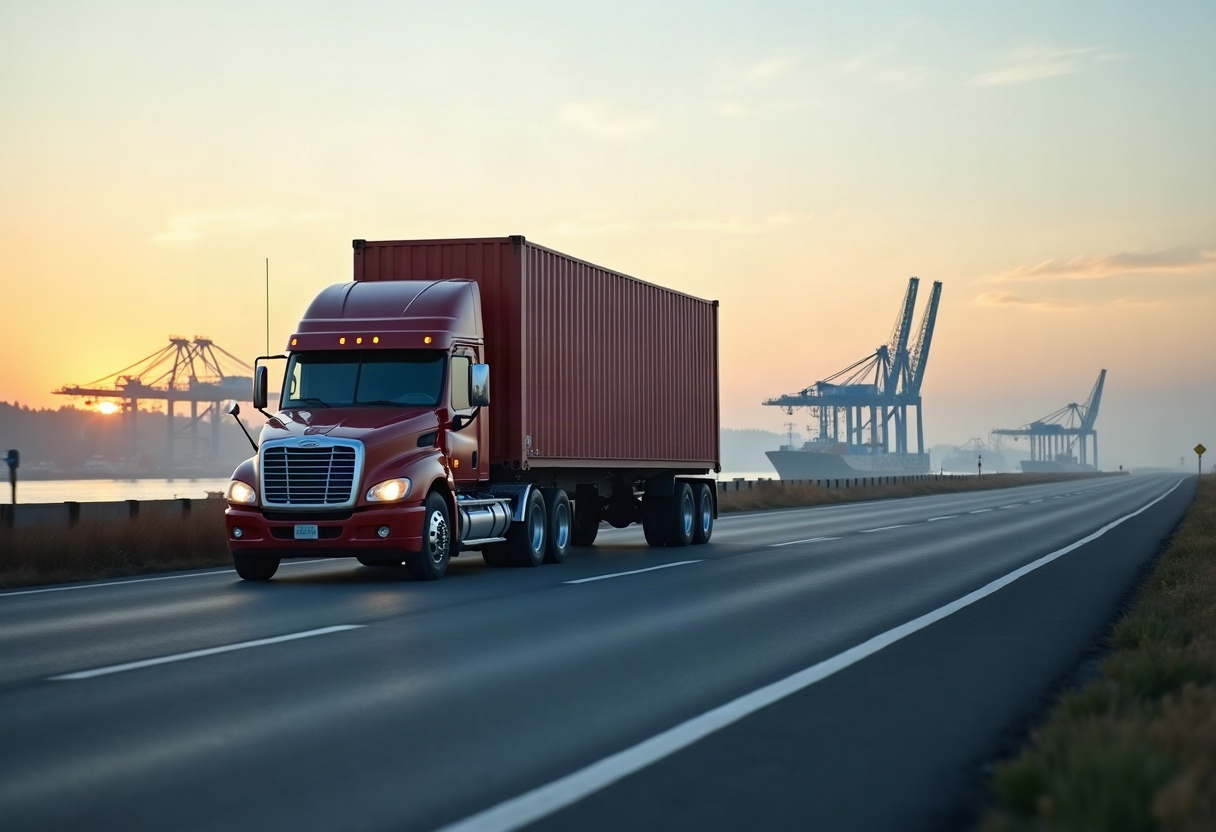
Container freight is the backbone of Pacific Northwest trade. Every day, hundreds of shipping containers move through the Port of Seattle and the Port of Tacoma — the Northwest Seaport Alliance — bound for warehouses in Kent, Auburn, Sumner, and Fife. If you are searching for container transport in Seattle, you need a carrier that knows the terminal gate procedures, has the right chassis equipment, and can move fast enough to beat dwell-time fees.
SeaSound Transport is a family-owned freight carrier based in Kent, WA. We have been moving containers along the I-5 and I-405 corridors for years, connecting the Ports of Seattle and Tacoma to inland distribution centers across the Pacific Northwest. This guide explains what container transport in Seattle involves, what to look for in a carrier, and how our service works.
What Container Transport in Seattle Involves
Container transport is the truck move that gets a shipping container from its arrival point — a marine terminal, a rail ramp, or a distribution center — to its next destination. In the Seattle-Tacoma area, that usually means one of three moves:
1. Marine Terminal Drayage
When a container ship arrives at the Port of Seattle or Port of Tacoma, the container is unloaded and staged at the terminal. A drayage carrier dispatches a truck with a chassis to the terminal, clears the gate process, picks up the container, and delivers it to a local warehouse or distribution center. This is the most common container transport move in the Seattle area, and it is what most shippers mean when they search for "container transport Seattle."
SeaSound Transport handles container drayage in Seattle and container drayage in Tacoma from all Northwest Seaport Alliance terminals. Our 24/7 operation means we can pick up containers as soon as they are released, before storage fees start accruing.
2. Intermodal Rail Ramp Moves
Containers that arrive by rail at the BNSF or Union Pacific intermodal ramps in the Tacoma-Seattle area also need truck transport for the final mile. The train moves the container long-distance; the truck handles pickup at the rail ramp and delivery to the warehouse. For more on how this works, see our guide on intermodal trucking in Seattle.
3. Container Relocation and Distribution
Sometimes containers need to move between warehouses, from a distribution center to a rail terminal for export, or from a storage yard to a final delivery point. These local container moves are common in the Kent Valley and South Sound industrial corridors, where warehouses cluster along the I-5 and SR-167 routes.
What to Look for in a Container Transport Carrier
Not every trucking company is equipped for container work. Here is what matters when you are choosing a carrier for container transport in Seattle:
Chassis Availability
Container transport requires a chassis — the wheeled frame that the container sits on. Port terminals and rail ramps do not always provide chassis, and chassis shortages can delay pickup for days. A carrier that owns or has guaranteed access to chassis can pick up your container immediately. SeaSound Transport maintains chassis equipment for 20', 40', 45', and 53' containers.
Terminal Knowledge
Every marine terminal and rail ramp has its own gate procedures, appointment systems, and documentation requirements. A carrier that works the Port of Seattle and Port of Tacoma daily knows which terminals require pre-arrival appointments, which accept walk-up gates, and how to handle the paperwork efficiently. This knowledge is the difference between a same-day pickup and a container stuck in the yard.
24/7 Operating Hours
Ports and rail terminals do not keep banker's hours. Container availability notices come at all hours, and free dwell time — the window before storage fees begin — is limited. A carrier that operates 24/7/365 can pick up containers the moment they are released, minimizing dwell time and avoiding avoidable storage charges. SeaSound Transport runs 24 hours a day, 7 days a week.
Own Fleet vs. Brokered
Many companies advertising "container transport" are freight brokers who do not own trucks. They book the move and find a third-party carrier to do the work, adding a markup and removing control. SeaSound Transport owns and operates its fleet of 10+ power units with CDL-certified drivers. When you call us, you are talking to the carrier that will do the work — not a middleman.
The Seattle-Tacoma Container Corridor
Container transport in Seattle is defined by geography. The Port of Seattle's terminals are along the Elliott Bay waterfront and the Duwamish industrial corridor. The Port of Tacoma's terminals sit along the Blair Waterway and Sitcum Waterway in Commencement Bay. Between them, the I-5 and I-405 corridors carry container freight to the warehouse districts of Kent, Auburn, Sumner, Fife, and Renton.
SeaSound Transport is based in Kent — the geographic center of this corridor. From Kent, a truck can reach the Port of Tacoma in under 30 minutes and the Port of Seattle in about 40 minutes, depending on traffic. That proximity matters because shorter distances to the terminals mean faster turnaround times, more daily moves per truck, and lower overall costs.
For a broader look at how freight moves through the region, see our guide on how to ship freight as a Washington business and our overview of ocean trucking at West Coast ports.
Getting Started with Container Transport
If you have a container arriving at the Port of Seattle or Port of Tacoma, or if you need to move containers between facilities in the Seattle area, the fastest path is a direct call. Contact SeaSound Transport at (206) 427-6615.
Tell us:
- The container size (20', 40', 45', or 53')
- The pickup location (which terminal or facility)
- The delivery address
- Your timing requirements
We will confirm availability, schedule the pickup, and handle the terminal gate process from start to finish. As a fully authorized interstate carrier (USDOT #4061311, MC-1541062), we can handle both local drayage and long-distance container transport across Washington, Oregon, and beyond. Visit our contact page or about page to learn more about our company and capabilities.