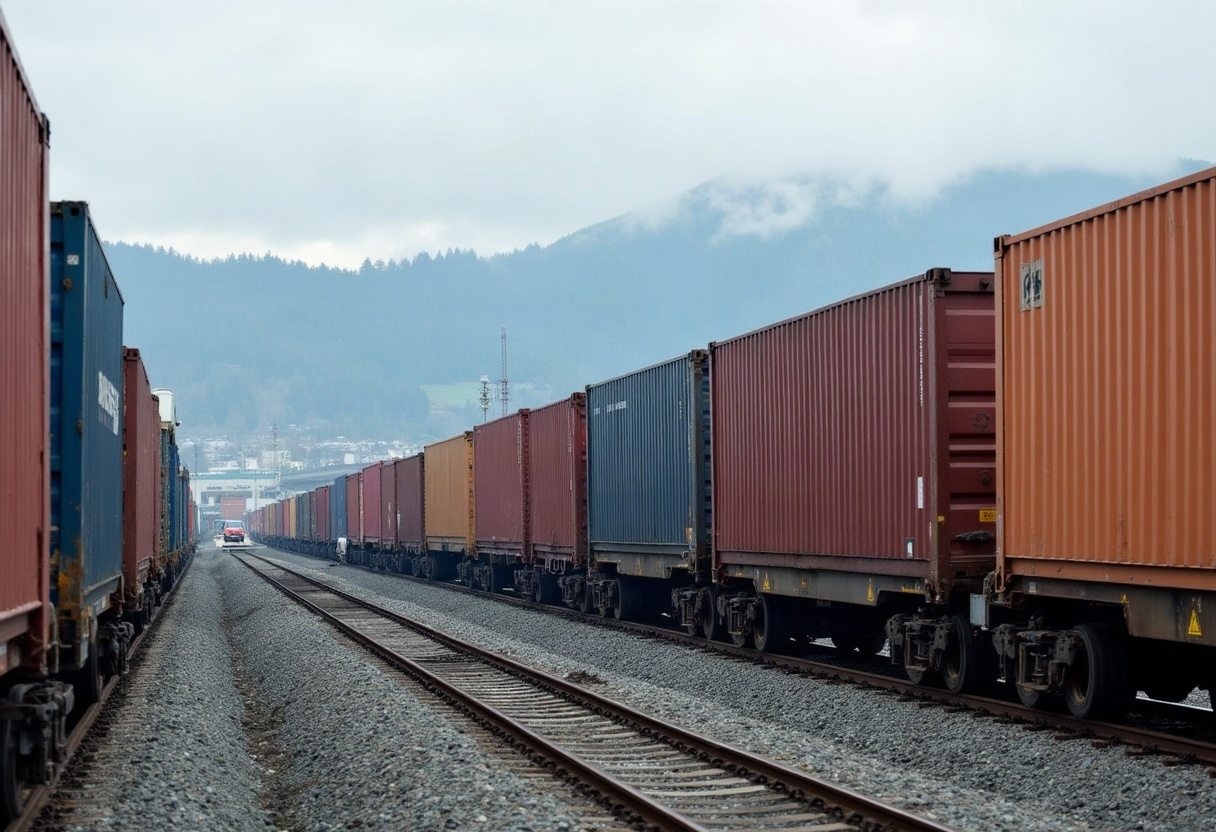
If you ship freight into or out of the Pacific Northwest, you have probably heard the term "intermodal trucking" and wondered how it differs from the drayage and long-haul trucking you already use. The short answer: intermodal trucking is the truck leg that connects a rail terminal to your warehouse. A train does the long-haul work, and a truck handles the first or last mile. In the Seattle and Tacoma area, that means picking up containers at BNSF or Union Pacific rail ramps and delivering them to distribution centers across Kent, Auburn, Fife, and Sumner.
What Intermodal Trucking Actually Is
Intermodal means the freight stays in the same container across multiple modes of transport — rail and truck, or rail and ocean. The trucking piece is the local move: picking up a container at a rail ramp and driving it to the consignee's dock, or picking up a loaded container at a warehouse and taking it to the rail terminal for outbound shipment.
The container itself is a standard 53-foot domestic intermodal box (or occasionally a 40-foot ocean container moving on a rail chassis). The trucking company provides the chassis, the driver, and the local knowledge to get in and out of the rail terminal efficiently.
How Intermodal Trucking Works in Seattle and Tacoma
The Seattle-Tacoma area has two major Class I railroads running intermodal service:
BNSF Railway operates a large intermodal facility in the Tacoma area, with service connecting the PNW to the Midwest, California, and Texas. BNSF's intermodal trains carry everything from consumer goods loaded in Southern California to agricultural products moving east from the Plains.
Union Pacific also serves the Tacoma-Seattle corridor, providing competing intermodal service to major inland destinations.
When a container arrives at the rail ramp on a train, it is lifted off the railcar and placed in a designated yard spot. The trucking company receives a "container available" notification, dispatches a driver with the right chassis, and the driver goes through the terminal gate, picks up the container, and delivers it to the consignee. The reverse happens for outbound loads.
Intermodal Trucking vs. Ocean Drayage
People often confuse intermodal trucking with ocean drayage, but the two are different operations:
- Ocean drayage pulls import containers off ships at the Port of Seattle or Port of Tacoma. The container arrived by sea, and the truck moves it from the marine terminal to the warehouse.
- Intermodal trucking picks up domestic containers at rail ramps operated by BNSF or UP. The container arrived by rail, not by ship.
Both use similar equipment — a truck, a chassis, and a container — but the terminal, the paperwork, and the release process are different. Ocean drayage requires a TWIC card and port-registered equipment. Intermodal trucking requires a valid ramp appointment and the rail line's release.
SeaSound Transport handles both. If you want to understand the full cost breakdown of either option, we can walk you through the numbers.
When Intermodal Makes Sense for PNW Shippers
Intermodal rail-plus-trucking is not always the right answer. Here is when it typically wins:
Long-haul lanes over 700 miles. The rail component saves money on fuel and driver hours. Lanes like Seattle to Chicago, Seattle to Los Angeles, or Tacoma to Dallas are prime intermodal corridors.
Consistent, repeatable volumes. If you ship 5 to 20 containers a week on the same lane, intermodal contracts lock in capacity and pricing that spot-market trucking cannot match.
Sustainability goals. Rail moves a ton of freight roughly 4 times farther per gallon of fuel than a truck. Shippers tracking carbon emissions often prefer intermodal for long-haul moves.
When it does not make sense: Short regional moves under 500 miles. The extra handling at the rail ramp — gate-in, lift, placement, gate-out — adds time and cost that direct trucking avoids. For moves within the Kent-Seattle-Tacoma corridor, direct trucking is almost always faster and cheaper. Our freight cost per mile guide breaks down when regional trucking rates beat intermodal pricing.
What SeaSound Transport Does for Intermodal Shippers
We run intermodal drayage out of the BNSF and UP ramps in the Tacoma area. Our drivers know the gate processes, the appointment systems, and the yard layouts. We handle:
- Import container pickup from rail ramps and delivery to warehouses in Kent, Auburn, Fife, Sumner, and the broader Seattle-Tacoma metro
- Export container pickup from warehouses and delivery to the rail terminal for outbound trains
- Chassis provision, container tracking, and proof-of-delivery documentation
- Coordination with the rail line and the shipper's broker to make sure releases are in place before the truck arrives
Most intermodal moves in our service area are same-day. A container available at the BNSF Tacoma ramp at 6 AM can be delivered to a Kent warehouse by mid-morning if the release and appointment line up.
Getting Started with Intermodal Trucking
If you are shipping containers via rail into the Seattle-Tacoma area and need a local carrier to handle the truck leg, the key is booking early. Rail ramp appointments fill up, especially on Mondays and Fridays when the weekly train blocks arrive. Give us the container number, the rail line, and the delivery address, and we can typically have a truck at the ramp within 24 hours.
For a step-by-step guide to shipping freight through the PNW, including how to choose between trucking and intermodal, we break down the full process from pickup to delivery.
Ready to move a container off the rail? Contact us to book intermodal drayage, or see our full freight services for everything we handle across the Seattle-Tacoma corridor.