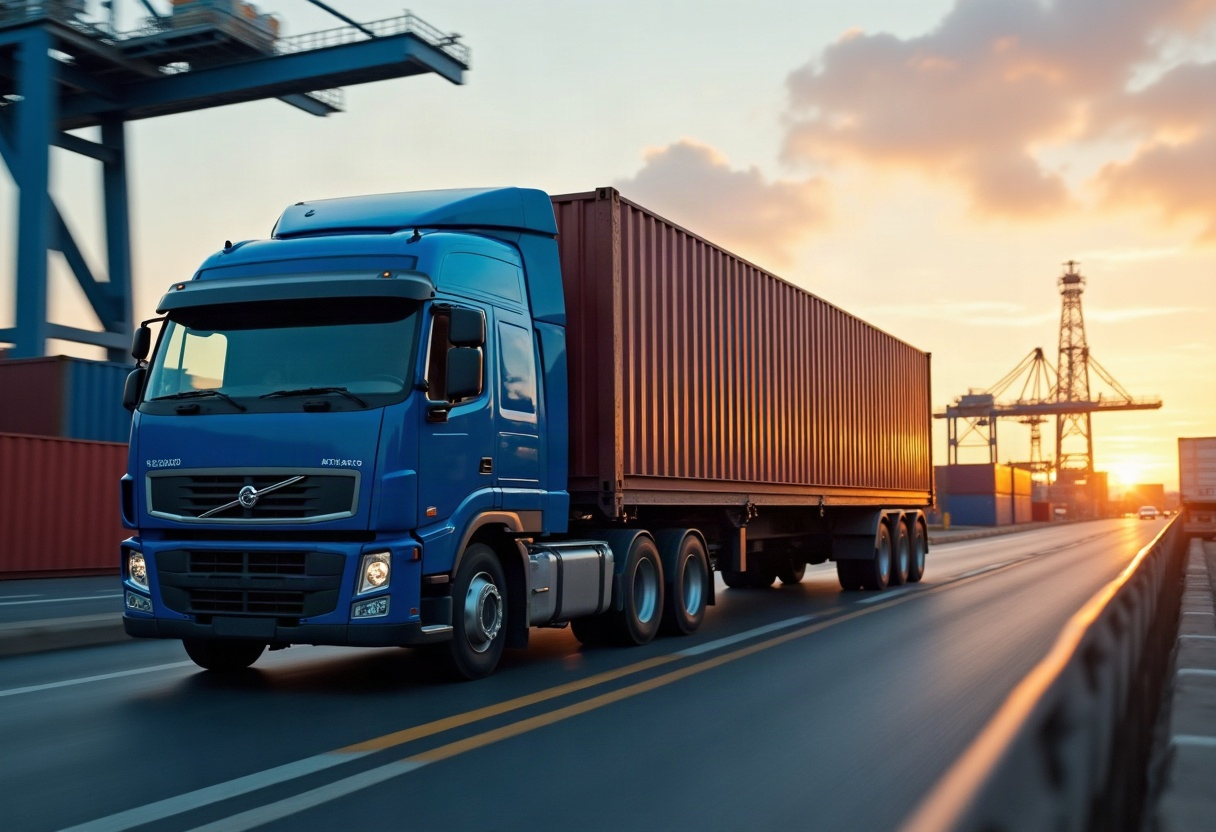
Container hauling is the link most shippers never think about until it goes wrong — the truck move that carries an intermodal container from the port or rail ramp to the warehouse door. In the Seattle-Tacoma corridor, that move is what connects the Port of Seattle and Port of Tacoma to the distribution centers, cold storage facilities, and manufacturers across Washington. When the search is "container hauling," the question behind it is practical: how does the move work, what does it cost, and how do I schedule it so my container does not sit at the terminal racking up fees? This guide covers the answers for shippers moving containers through the Seattle-Tacoma corridor.
SeaSound Transport provides container hauling and drayage across the Seattle-Tacoma corridor and the greater Puget Sound region. Contact us to schedule your container move.
What Container Hauling Actually Is
A shipping container arrives in the Pacific Northwest by ocean vessel or by rail. It lands at a terminal — the Port of Seattle's Terminal 18 or Terminal 46, or the Port of Tacoma — and it sits there until a truck picks it up. That truck move is container hauling, also called drayage. It is the short-haul leg that moves the container from the terminal to a warehouse, a transload facility, a jobsite, or a rail ramp for the next leg.
Container hauling is distinct from long-haul trucking. The distances are short — often under 50 miles — but the logistics are dense: chassis matching, terminal appointment windows, container availability, customs release, and demurrage clocks that start ticking the moment the container is discharged. A container hauling carrier manages all of that so the shipper does not have to. For the broader picture of how containers move through Washington, see our container transport Seattle guide.
How Container Hauling Works in Seattle-Tacoma
The standard container haul follows five steps:
- Container availability. The carrier checks the terminal for container availability — whether the container has been discharged, is in the right stack, and is released by customs. A container that is not yet available cannot be picked up, no matter how good the truck is.
- Chassis assignment. The carrier matches a chassis to the container size (20, 40, 45, or 53 foot). Reefers need a chassis with a genset or a plug requirement.
- Terminal appointment. Most terminals require an in-gate appointment window. The carrier books the slot and dispatches the driver.
- Pickup and haul. The driver gates in, collects the container, and hauls it to the destination. For a local move from the Port of Tacoma to a Kent warehouse, the drive is typically 30 to 60 minutes.
- Delivery and return. The container is delivered to the warehouse or jobsite, and the empty is returned to the terminal or a designated depot when the shipper is finished with it.
For the delivery-side specifics — what to expect at the door, scheduling, and pre-pulls — our container delivery guide covers the receiving end in detail.
What Container Hauling Costs
Container hauling is priced per move, and the cost depends on a handful of variables:
- Container size — 20-foot, 40-foot, and high-cube carry different chassis and weight considerations.
- Distance — a cross-town move from the Port of Tacoma to a Fife warehouse costs less than a haul from the Port of Seattle to a facility in Kent or Auburn.
- Chassis fee — leased or motor-carrier-owned chassis, split-fee arrangements.
- Fuel — a fuel surcharge that adjusts with diesel prices.
- Accessorials — pre-pull, storage, detention, bobtail, and wait-time charges.
A typical local container haul in the Seattle-Tacoma corridor runs $200 to $600 per move. The carrier provides an itemized quote based on the lane and container type. For the broader freight cost context, see our freight charges guide and our freight shipping cost breakdown.
Equipment for Container Hauling
The right equipment is what makes or breaks a container haul:
- Chassis sized to the container (20, 40, 45, 53 foot), with twist-locks that secure the box.
- Reefer capability for refrigerated containers — a genset (generator set) or terminal plug power for the haul.
- Overweight permits for containers that exceed legal gross weight; some loads require a tri-axle chassis.
- Day-cab tractors built for short, dense urban moves in and out of congested terminals.
A carrier that shows up with the wrong chassis loses the appointment window and the container sits. SeaSound Transport matches equipment to the load before dispatch so the move happens on the booked window. For the intermodal side of the operation, our intermodal trucking Seattle guide explains how containers connect to the rail network.
Scheduling and Avoiding Demurrage
The single most expensive mistake in container hauling is letting a container sit at the terminal past its free-time window. Demurrage charges at the Port of Seattle and Port of Tacoma accrue daily once free time expires, and they add up faster than the cost of the haul itself.
Two practices prevent it:
- Pre-pull. When your receiving appointment is later than the terminal free-time window, the carrier picks up the container early and stages it at their yard. The pre-pull fee is small; the demurrage it avoids is not.
- Appointment discipline. Book the in-gate and receiving appointments before the container is discharged whenever possible, so the move is queued the moment the container is available.
A carrier that understands the Seattle-Tacoma terminal rhythm — which terminals are congested, which stacks are slow, where the free-time clocks are tightest — is what keeps your container moving instead of sitting. That is the value of a container hauling partner who works the Port of Seattle and Port of Tacoma every day. To schedule your next container move, contact SeaSound Transport.