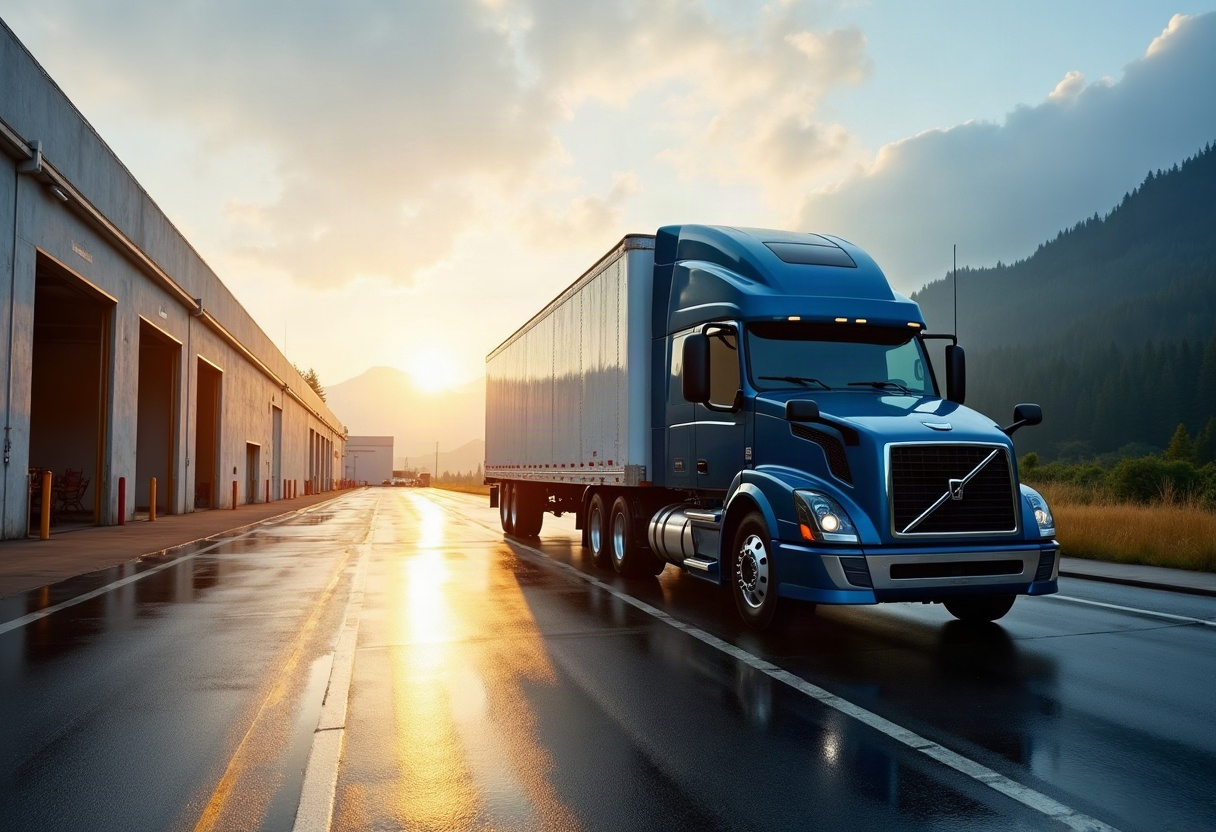
A freight carrier is the company that actually moves your goods. Not the broker who arranges the load. Not the warehouse that stores it. The carrier owns the trucks, employs the drivers, carries the cargo under its own bill of lading, and is legally responsible for your freight from pickup to delivery.
If you are searching for a "freight carrier," you are most likely a shipper — a manufacturer, distributor, importer, or freight forwarder — trying to decide who to hand your load to. This guide explains what a freight carrier does, the difference between FTL and LTL, how intermodal freight carriers fit in, and exactly what to check before you hand a carrier your cargo. It closes with how SeaSound Transport runs as a freight carrier out of Kent, WA.
What a freight carrier does
A freight carrier provides the physical transport of goods. The core job is simple: pick up the cargo, move it safely, and deliver it on time. The work behind that single sentence is what separates a real carrier from a liability.
- Equipment. The carrier provides the power unit, the trailer, and where relevant the chassis. A carrier that owns its fleet controls maintenance and availability. A carrier that rents equipment for every load is one missed rental away from a late delivery.
- Drivers. The carrier employs the drivers who hold commercial driver's licenses (CDL) and are responsible for the cargo in transit. A carrier with W-2 drivers has direct control over training and conduct; a carrier that relies on unvetted owner-operators has less.
- Liability. The carrier carries cargo insurance and is on the hook for loss or damage under the bill of lading. A broker passes that liability through; an asset-based carrier owns it.
- Compliance. The carrier holds a USDOT number and an MC number issued by the FMCSA, maintains driver qualification files, runs drug and alcohol testing, and keeps equipment inspection records current.
If any of those four pieces is missing, you are not dealing with a freight carrier — you are dealing with a middleman. For a deeper breakdown of the freight shipping landscape, see our what is freight shipping guide.
FTL vs LTL: the two modes that matter most
Most freight carriers offer two core service types. Which one you need depends on the size of your load.
Full Truckload (FTL). One shipper, one trailer, one destination. FTL makes sense when your shipment is large — generally over 10,000 pounds or more than 10 pallets — or when you want the trailer sealed at origin and not opened until delivery. FTL is faster because the truck goes straight from pickup to delivery without stopping to consolidate other freight.
Less-than-Truckload (LTL). Multiple shippers share one trailer, and each pays for the space they use. LTL is the right choice for shipments between 150 and 15,000 pounds that do not need a full trailer. The trade-off is transit time: LTL freight moves through a hub-and-spoke network, so a 300-mile LTL shipment can take 2 to 4 days while an FTL shipment of the same distance runs same-day or next-day.
A capable freight carrier offers both and tells you which one fits your load — not which one fits their revenue. If you want the mechanics of booking either mode, our how to ship freight walkthrough covers the paperwork and the timing.
Intermodal freight carriers
An intermodal freight carrier moves containers that travel by more than one mode — typically ocean or rail for the long leg and truck for the short legs. In the Pacific Northwest, that means containers arriving at the Port of Seattle or Port of Tacoma, then trucked to a warehouse in Kent, Auburn, or Sumner.
The freight carrier's job in an intermodal move is drayage: the short-haul pickup from the terminal, the drive to the warehouse, and the return of the empty container and chassis. Drayage looks simple. It is not. Terminal appointments, chassis pools, gate congestion, and free-time deadlines all compress the window for a successful move. Our drayage services guide covers the terminal-specific details, and our intermodal trucking guide explains how rail-to-truck moves work across the region.
What to look for in a freight carrier
Before you book a load, verify five things. Each one is a place where a carrier can quietly fail you.
- FMCSA credentials. Look up the USDOT and MC numbers on the FMCSA SAFER system. Confirm the carrier is authorized for interstate property transport and check the listed cargo classifications. A carrier without the right cargo classification is not insured or authorized for your specific freight.
- Cargo insurance. Ask for a certificate of insurance. Standard carrier liability is $100,000 per shipment, but many loads need higher coverage. A carrier that will not send a COI is a carrier that cannot prove it can pay for your loss.
- Availability. Freight does not wait for business hours. A carrier that answers the phone at 2 a.m. and dispatches a truck the same night is a carrier that will not let your container rack up port storage fees. A carrier that only runs 8-to-5 is a carrier that will.
- Fleet and drivers. Ask how many power units the carrier runs and whether the drivers are CDL-certified employees. A carrier with 2 trucks and rented drivers is one breakdown away from a missed delivery. A carrier with a maintained fleet has redundancy.
- Pricing transparency. Get a quote that lists line-haul, fuel surcharge, and any accessorials. A carrier that quotes a flat number and adds fees after delivery is not cheaper — it is just less honest upfront.
For a region-specific view of what good looks like, our trucking company Seattle Washington post covers the Pacific Northwest market in detail.
How SeaSound Transport operates as a freight carrier
SeaSound Transport LLC is a family-owned freight carrier based in Kent, WA. The yard sits 10 minutes from the I-5 and I-405 corridors, which connect the Ports of Seattle and Tacoma to the inland warehouse belt of Kent, Auburn, Renton, and Sumner. The company runs 24 hours a day, 7 days a week, 365 days a year, with a fleet of 10+ power units and CDL-certified drivers.
What that looks like in practice:
- Credentials. USDOT #4061311, MC-1541062, Washington State UBI 605187486. Cargo classifications cover General Freight and Intermodal Containers. Fully authorized for interstate property transport.
- Service mix. Local and long-distance trucking in FTL and LTL, freight and container transport in 20', 40', 45', and 53' containers, intermodal drayage at the Ports of Seattle and Tacoma and the Northwest Seaport Alliance, and distribution services including last-mile delivery and warehouse integration.
- 24/7/365 dispatch. A live dispatcher answers the phone outside business hours. Port terminals and rail ramps have limited free storage time, and storage fees accumulate daily once free time expires. A 24/7 carrier picks up a container the moment it becomes available.
- Direct dispatcher relationships. Shippers talk to the same dispatcher each time, not a rotating call center. That dispatcher knows the lanes, the drivers, and the terminals.
- No hidden surcharges. Quotes list line-haul and fuel separately. Route optimization targets 15 to 20 percent fuel reduction, and those savings show up in the quote rather than being absorbed and re-billed.
- Preventive maintenance. The maintenance schedule exceeds federal requirements, which keeps the fleet on the road and the cargo on time.
The Shoker family founded the company and grew it from a single truck to its current fleet. Family ownership means the people answering the phone are the people whose name is on the trucks — which changes how a carrier behaves when something goes wrong at 11 p.m. on a Sunday.
Get a freight quote
Call (206) 427-6615 or email Contact@seasoundtransport.com. Tell us the origin, destination, weight or container size, and timing. We provide direct pricing with no hidden surcharges, and as a family-owned carrier with our own fleet, we can often schedule same-day or next-day pickup depending on equipment and driver availability. Request a quote and we will respond fast — because freight does not wait, and neither do we.