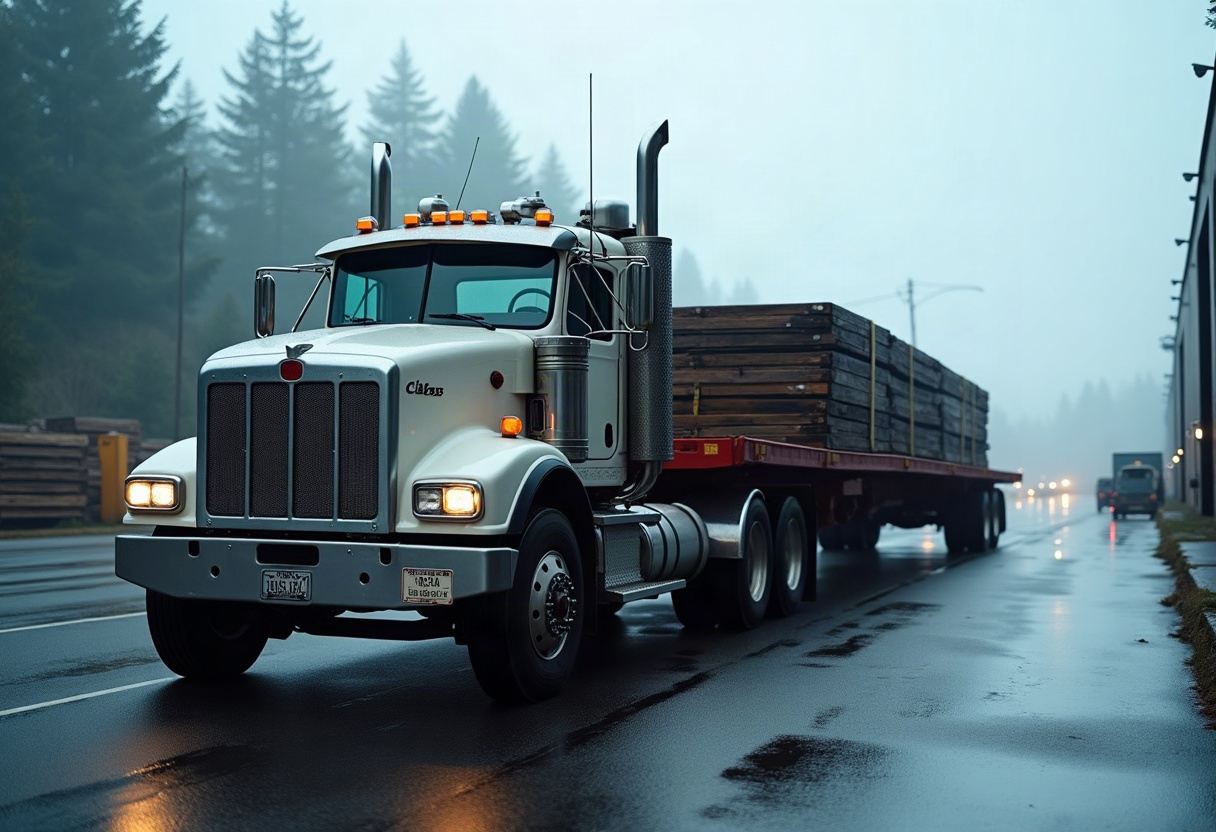
Flatbed hotshot trucking sits in the gap between a courier van and a full semi. It uses a smaller truck (often a Class 3 to Class 5 pickup or medium-duty cab) paired with a flatbed trailer to move open-deck freight that has to leave today, not next week. If you are searching "flatbed hotshot," you most likely have a load of steel, lumber, machinery, pipe, or building materials on a dock in the Puget Sound region, and you need it on a flatbed and out the door within hours.
This guide explains what flatbed hotshot trucking is, when it beats a standard truckload, what drives the price, and what to check before you hand an open-deck load to a carrier. It closes with how SeaSound Transport LLC runs out of Kent, WA. If you want the short version, jump to our services page or call (206) 427-6615.
What flatbed hotshot trucking actually is
A hotshot setup is a smaller truck and a flatbed or gooseneck trailer, usually 30 to 40 feet, hauling a load that is too big or too awkward for a van but does not need a full 53-foot trailer. The load rides on an open deck, which means anything that cannot be stacked in a dry van — heavy equipment, structural steel, pipe, rebar, precast concrete, lumber bundles, or oversized pallets — can be strapped down and tarped and moved.
The "hotshot" part refers to how the load is dispatched. It is an expedited, dedicated move. The truck picks up your freight, drives straight to the receiver, and does not stop to consolidate other cargo along the way. That is the same direct-routing logic as a full truckload, just on a smaller rig.
For open-deck freight specifically, this matters because the alternatives are worse. A courier cannot take 8,000 pounds of steel. A standard flatbed with a Class 8 tractor can, but it costs more to send and is often booked days out. A hotshot flatbed splits the difference on price and beats it on speed.
When flatbed hotshot beats a standard truckload
Flatbed hotshot is the right call when three things line up at once:
- The load fits the rig. Roughly 10,000 to 26,000 pounds, under 40 feet of deck, and open-deck or oversized. Heavier than that and you need a full semi.
- It is time-sensitive. The load has to move the same day or next morning. Standard FTL carriers often book two to five days out; a hotshot truck is set up to leave within hours.
- The route is regional. Most hotshot runs stay inside a one-day drive. Around here that means Seattle to Portland, Kent to Spokane, or a port-to-warehouse move along the I-5 corridor.
If your freight is over 10,000 pounds and does not need an open deck, a sealed full truckload move is usually cheaper per mile. If it is under 10,000 pounds and time-critical, hotshot is the better fit. The decision is mostly about deck type and urgency, not just size.
What drives the price on a flatbed hotshot load
Hotshot pricing is not a flat per-mile number. It is built from the same pieces as any truckload quote, weighted toward speed and availability.
- Line-haul rate per loaded mile. The base cost of the truck and driver for the loaded distance. Hotshot line-haul per mile often runs higher than dry-van FTL because the truck is dedicated and dispatched on short notice.
- Fuel surcharge. Separate from line-haul and tied to diesel prices. A carrier that folds fuel into one flat number makes it harder to compare quotes.
- Tarping and securement. Open-deck freight that needs a tarp, chains, binders, or dunnage carries an accessorial fee. Lumber and steel usually get tarped; machinery usually gets chained.
- Layover and detention. If the shipper or receiver holds the truck past free time, the clock starts. Detention is the most common place a "cheap" quote turns expensive.
- Empty miles. Hotshot trucks often deadhead back empty because there is no return load. Some of that cost is built into the line-haul; a carrier that hides it will surface it as a surprise fee.
For a side-by-side look at how freight pricing is built, our freight charges breakdown walks through each line item. The point is the same here: a quote that lists line-haul, fuel, and accessorials separately is a quote you can actually compare.
What to verify before you book an open-deck carrier
Open-deck freight is where cargo damage and roadside compliance failures show up most. Before you hand a load to a flatbed carrier, check four things.
- FMCSA authority. Look up the USDOT and MC numbers on the FMCSA SAFER system. Confirm the carrier is authorized for property transport and that the listed cargo classification covers your freight. A carrier without the right classification is not insured or legal for your load.
- Cargo insurance. Ask for a certificate of insurance. Standard carrier liability is around $100,000 per shipment, but steel, machinery, and oversized loads often need more. A carrier that will not send a COI is a carrier that cannot prove it can cover your loss.
- Equipment that matches the load. Ask what deck length, weight rating, and securement gear the truck carries. A 30-foot flatbed cannot legally take a 40-foot steel bundle, and a trailer without enough chain and binder capacity cannot legally secure it.
- Availability and dispatch. Open-deck freight does not wait for business hours. A carrier that answers at 2 a.m. and dispatches the same night is the one that keeps your receiver from standing a crew around waiting. A carrier that only runs 8-to-5 is the one that does not.
For the Pacific Northwest market in detail, our trucking company Kent WA page covers what good carrier behavior looks like on this corridor.
How SeaSound Transport handles open-deck and expedited freight
SeaSound Transport LLC is a family-owned trucking company at 28227 85th Ave S, Kent, WA, running 24 hours a day, 7 days a week, 365 days a year. The yard sits minutes from the I-5 and I-405 corridors that connect the Port of Seattle, the Port of Tacoma, and the inland warehouse belt of Kent, Auburn, Renton, and Sumner.
We provide local and long-distance trucking in FTL and LTL, freight and container transport, and intermodal drayage at the Port of Seattle and Port of Tacoma. For time-sensitive open-deck loads in the region, our trucking fleet and CDL drivers run the same direct-routing model hotshot moves use: pickup, straight drive, delivery, no consolidation stops. The fleet is sized for the load in front of it rather than forcing every shipment into one trailer type.
What that looks like in practice:
- Credentials. USDOT #4061311, MC-1541062, Washington State UBI 605187486. Cargo classifications cover General Freight and Intermodal Containers. Fully authorized for interstate property transport, so a load that starts in Kent and ends in Portland or beyond is legal on one bill of lading.
- 24/7 dispatch. A live dispatcher answers outside business hours. Open-deck freight that lands on a dock at 6 p.m. needs a truck that night, not a callback Monday morning.
- Direct dispatcher relationships. Shippers talk to the same dispatcher each time, not a rotating call center. That dispatcher knows the lanes, the terminals, and the drivers.
- Separate fuel and line-haul pricing. Quotes list line-haul and fuel separately so you can compare them against any other carrier's quote, line by line.
- Preventive maintenance. The maintenance schedule exceeds federal requirements, which keeps trucks on the road and loads on time.
For freight that arrives by ocean or rail and then needs an open-deck move out to a jobsite, our container drayage Seattle and container drayage Tacoma pages cover the terminal side of that move.
Book a flatbed hotshot load
Call (206) 427-6615 or email Contact@seasoundtransport.com. Tell us the origin, destination, weight, deck type, and timing. We provide direct pricing with fuel and line-haul listed separately, and as a family-owned carrier with our own fleet we can often schedule same-day or next-day pickup depending on equipment and driver availability. Request a quote and we will respond fast — because open-deck freight does not wait, and neither do we.