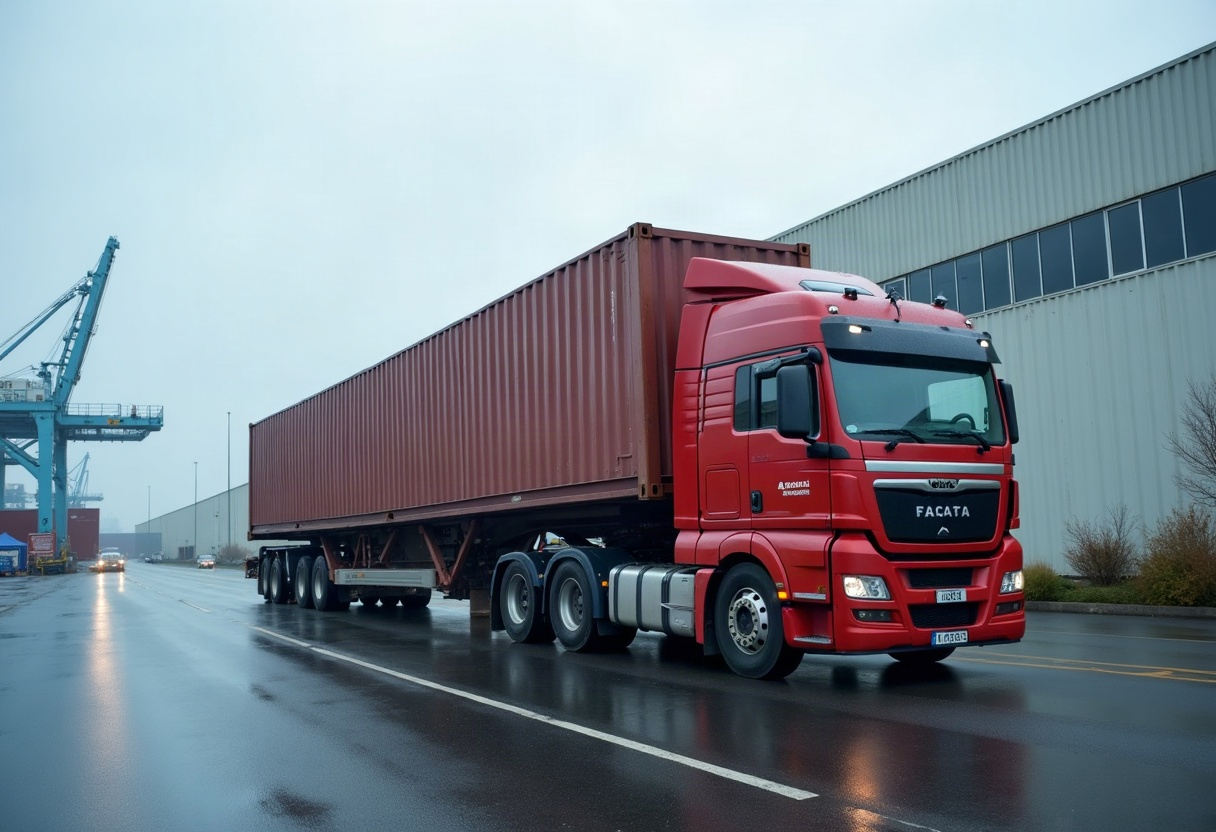
Once a shipping container clears the port or rolls off a train, it still has to get to your warehouse — and that last leg, the truck move from terminal to door, is where a lot of delivery windows get won. Container delivery is the drayage step that bridges the intermodal network and your dock, and in the Seattle-Tacoma corridor it moves a lot of Pacific Northwest freight.
This guide covers how container delivery works, what it costs in Washington, what can delay it, and how to choose a drayage carrier that keeps your containers moving.
What Container Delivery Is
Container delivery is the truck transport of an intermodal container — usually 20, 40, 45, or 53 feet — from a port terminal, rail ramp, or distribution center to its destination. It is the "last mile" of intermodal freight: the long-haul portion (ocean or rail) is done, and a drayage truck with a chassis moves the container the final distance.
It sounds simple, but the work is in the coordination: matching the right chassis to the container size, scheduling around terminal hours and appointment windows, dealing with customs releases, and avoiding the demurrage and detention fees that pile up fast when a container sits.
How Container Delivery Works in the Seattle-Tacoma Corridor
A typical local move runs like this:
- Container arrives at the Port of Seattle, Port of Tacoma, or a rail ramp.
- Paperwork clears — customs release, terminal availability, and any holds are resolved.
- Carrier dispatches a truck and chassis sized to the container (20', 40', 45', or 53').
- Pickup and delivery — the truck pulls the container from the terminal and delivers it to your dock or yard within the appointment window.
- Empty return — once you've unloaded, the empty container and chassis go back to the terminal or depot.
The intermodal container itself is built to move across ocean, rail, and road without being unpacked — that standardization is what makes the whole chain work. Read our drayage services overview for how the pieces fit together.
What Container Delivery Costs in Washington
Local drayage in the Seattle-Tacoma corridor typically runs $200 to $600 per move, depending on:
- Container size and type — 20' vs 40'/45'/53', standard vs high-cube, refrigerated (reefer) or overweight
- Distance from the port or rail ramp to your door
- Chassis fees — split or pooled chassis pools add cost
- Accessorials — pre-pull, storage, detention, after-hours, or lift-gate needs
- Fuel and market demand — peak season and congestion drive rates up
Longer regional hauls (e.g., Tacoma to a warehouse in the Cascade foothills) cost more than cross-town moves. The biggest avoidable cost is usually demurrage — terminal storage fees that kick in when a container sits past its free time, which is exactly why pre-pulls exist. See our breakdown of freight charges and freight shipping costs for how these add up.
What Delays Container Delivery
Most delays are not the truck — they're upstream:
- Port congestion and terminal appointments — terminals control pickup windows; missing one pushes the move a day.
- Customs holds — a container isn't available until it's released.
- Paperwork gaps — missing bill of lading, delivery order, or chassis split.
- Demurrage risk — when free time runs out before your appointment, you need a pre-pull to stage the container.
- Chassis availability — in tight markets the right chassis can be scarce.
A drayage carrier that knows the local terminals — Port of Seattle, Port of Tacoma, and the regional rail ramps — anticipates these and schedules around them. That local knowledge is the difference between a same-day delivery and a container sitting on the dock accruing fees. See our guide on how to ship freight for the broader workflow.
Choosing a Container Delivery Carrier in Washington
Look for a carrier that runs its own trucks and chassis (not just brokers), is familiar with the Port of Seattle and Port of Tacoma terminal processes, can handle 20/40/45/53-foot containers, and offers pre-pull and storage when your appointment doesn't line up with free time. Confirm insurance, ask about overweight and reefer handling, and check that they track detention and demurrage so you're not surprised by a bill.
At SeaSound Transport in Kent, WA, we handle intermodal drayage and container transport across the Seattle-Tacoma metro and the broader Pacific Northwest, moving 20', 40', 45', and 53' containers between the ports, rail ramps, and our customers' docks. If you have a container inbound and need it delivered on schedule — without the demurrage surprises — we can quote the move and get a truck on it.